Gloucester County Guide

Historic Places in Gloucester County

Explore Revolutionary War landmarks, colonial meeting houses, early inns, historic districts, South Jersey schoolhouses, and preserved buildings across Gloucester County.

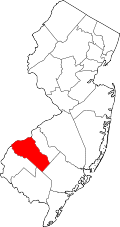
Map highlighting Gloucester County in New Jersey

County History

Gloucester County Historic Overview

Gloucester County, founded in 1686, once included the land that later became Atlantic and Camden Counties. The original NJTGO page describes the county as an agricultural, industrial, and residential area, with farming, fruit, vegetables, poultry, dairy, livestock, canneries, and nearby markets helping make it one of New Jersey’s food-producing sections.

This historic guide keeps the original NJTGO directory intact while making it easier to browse by area and theme.

Planning Notes

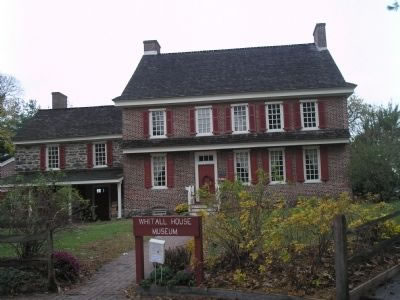
Many historic properties are active churches, privately owned buildings, museums, public parks, or campus buildings. Always confirm hours, access, parking, tour availability, and photography rules before visiting. Red Bank Battlefield and the Whitall House have seasonal tours, while Gloucester County Historical Society provides museum, library, and research resources.

Historic Places

Woodbury & Nearby History

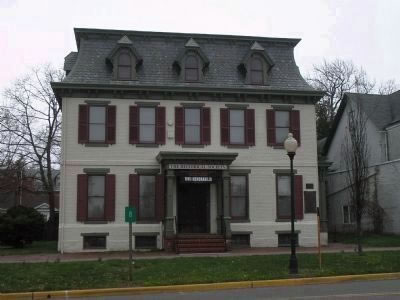
Home of Captain James Lawrence

Photo by Bill Coughlin, courtesy of HMdb.org

War of 1812Woodbury History

Home of Captain James Lawrence

Woodbury

North Broad Street, Woodbury, NJ 08096

Captain James Lawrence was a naval hero in the War of 1812. His greatest victory was the capture and sinking of H.M.S. Peacock while he commanded the sloop of war U.S.S. Hornet.

He died in action on June 1, 1813 during an engagement between U.S.S. Chesapeake and H.M.S. Shannon, remembered for the words “Don’t give up the ship.”

General Cornwallis made his headquarters in this house. Today it serves as headquarters of the Woodbury Historical Society.

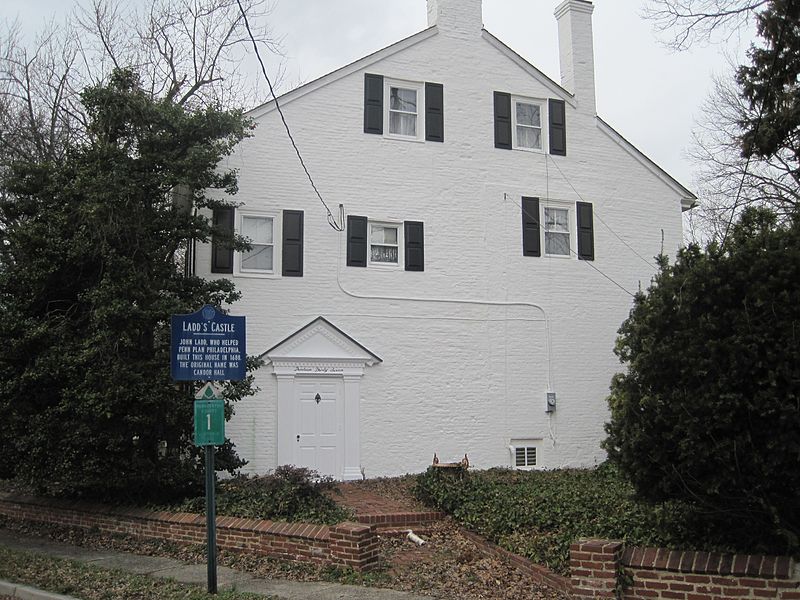
Ladd's Castle / Candor Hall

Photo courtesy of Wikipedia.org

1688Early Colonial

Ladd's Castle / Candor Hall

Woodbury

Lafayette Avenue and Colonial Avenue, Woodbury, NJ 08096

John Ladd, a surveyor who helped William Penn plan Philadelphia, built this house in 1688. The original name was Candor Hall.

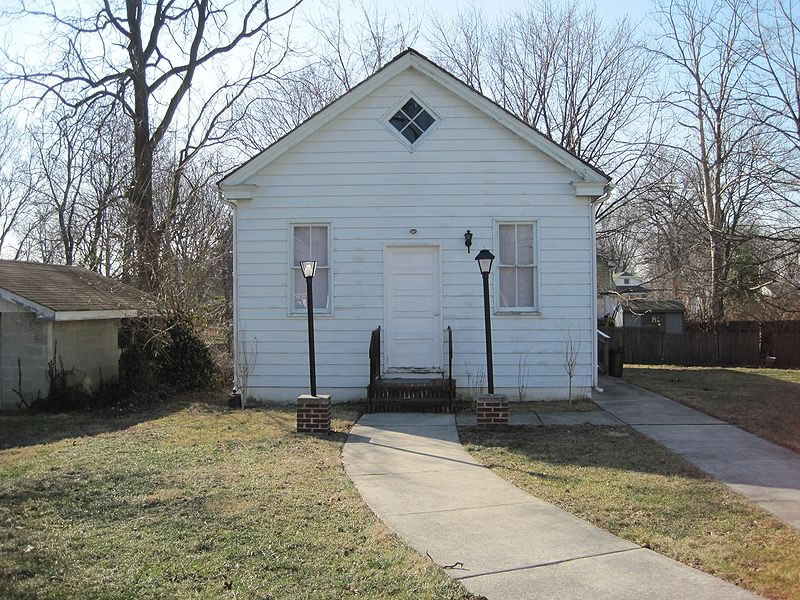
Carpenter Street School

Photo courtesy of Wikipedia.org

African-American HistorySchoolhouse1840

Carpenter Street School

Woodbury

Woodbury, NJ

A rare antebellum survivor, the Old Carpenter Street School may be New Jersey’s oldest existing schoolhouse built for African-Americans. It is also the oldest surviving structure associated with the Bethel African Methodist Episcopal Church in Woodbury, a congregation founded in 1817. Built by Joseph Tatum in 1840 in vernacular Gothic Revival style, the frame building became a public school in 1881 and later a parish house.

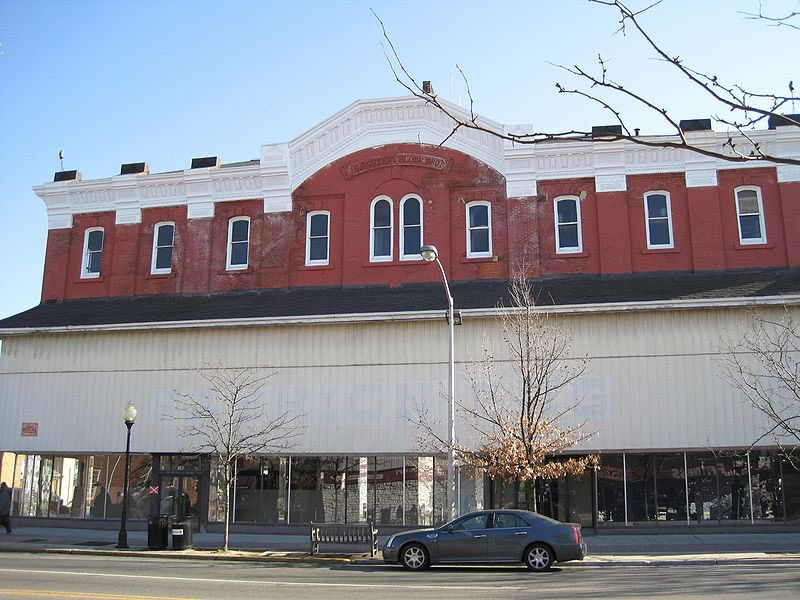
G.G. Green's Block

Photo courtesy of Wikipedia.org

Downtown WoodburyCommercial History

G.G. Green's Block

Woodbury

108 S. Broad Street, Woodbury, NJ

This historic three-story building occupies much of a city block on South Broad Street and was erected more than a century ago.

Thompson House

Photo courtesy of Wikipedia.org

1892Commercial History

Thompson House

Woodbury

Woodbury, NJ

The house was built in 1892 and is also known as Thompson’s Grocery Store.

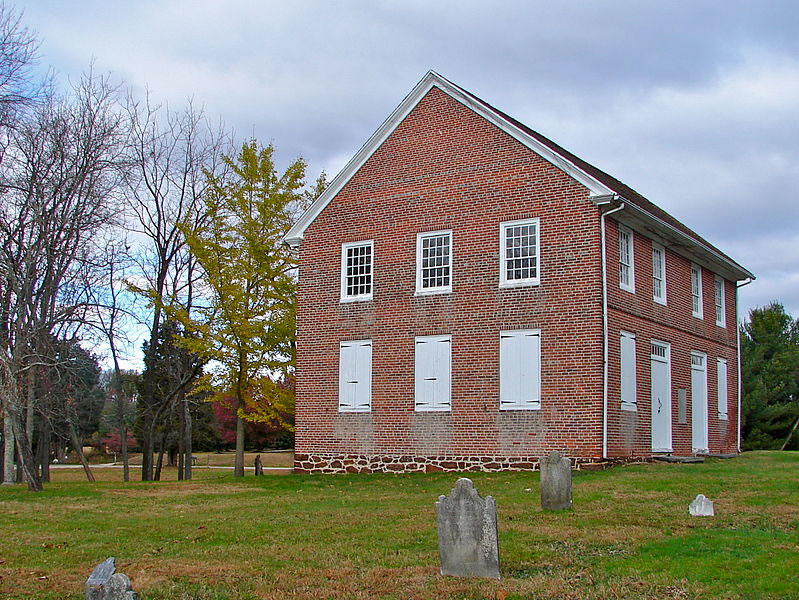
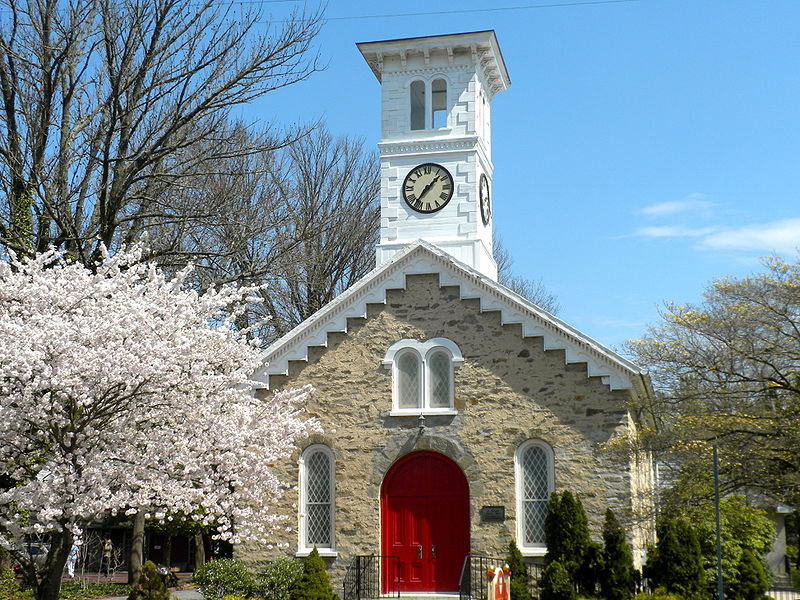
Woodbury Friends Meeting House

Photo courtesy of Wikipedia.org

Quaker History1715

Woodbury Friends Meeting House

Woodbury

120 N. Broad Street, Woodbury, NJ

A historic Quaker meeting house built in 1715.

Benjamin Clark House

Photo courtesy of Wikipedia.org

Revolutionary WarFarmstead

Benjamin Clark House

Deptford

Woodbury-Glassboro Road, Deptford, NJ

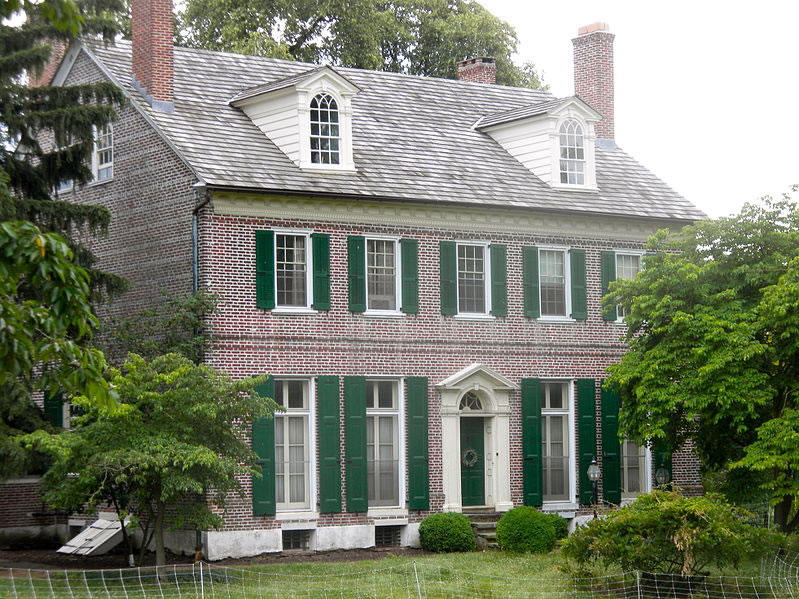
This was the original Benjamin Clark farm. The west section of the brick home is the oldest portion, built in the late 18th century; the east section includes a stone insert dated 1804. Benjamin Clark was a Revolutionary soldier, and his home was raided by the British several times because of his patriotic activities.

Historic Places

Swedesboro, Woolwich & Greenwich Area

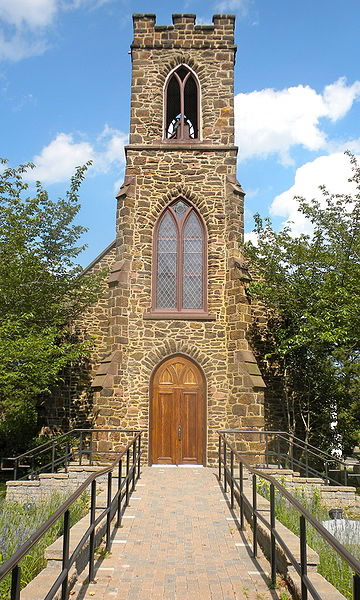
Adams Meeting House / Old Stone Church

Photo courtesy of Wikipedia.org

1793Methodist HistoryCemetery

Adams Meeting House / Old Stone Church

Swedesboro

Oak Grove and Meeting House Road, Swedesboro, NJ

Built in 1793 by local farmers for the Methodist religion, the church is said to be the oldest Methodist church in South Jersey. Also known as Adams Meeting House or Oak Grove Church, it was built in the Adams neighborhood on a corner of the Joseph and Elizabeth Adams farm. The Adams family later gave adjoining land for a burial ground.

Moravian Church

Photo courtesy of Wikipedia.org

1786 / 1789Moravian HistoryGCHS

Moravian Church

Woolwich Township

Swedesboro-Sharptown Road, Woolwich Township, NJ

The original NJTGO source lists the church as built in 1786. Gloucester County Historical Society notes the Moravian Church at Oldman’s Creek remains a major historic property.

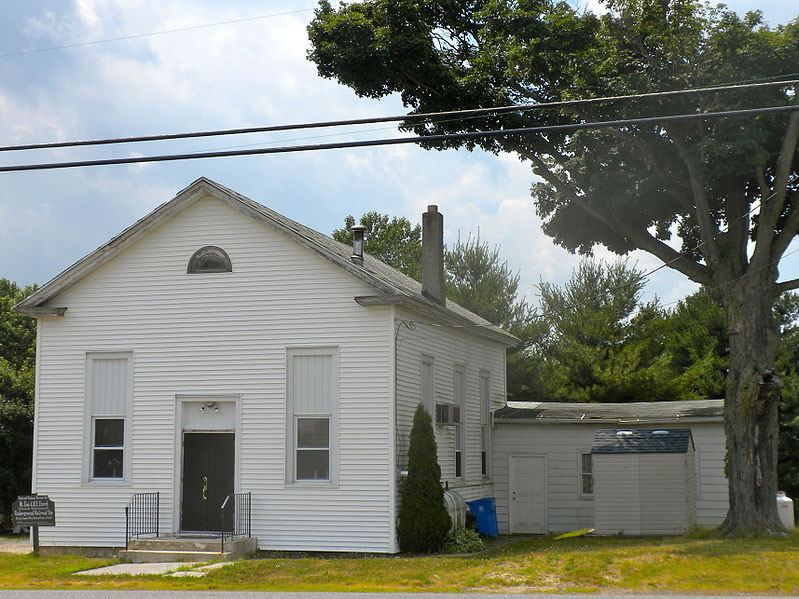
Mount Zion African Methodist Episcopal Church

Photo courtesy of Wikipedia.org

AME ChurchUnderground Railroad1799

Mount Zion African Methodist Episcopal Church

Woolwich Township

172 Garwin Road, Woolwich, NJ

Built in 1799. According to the sign in front of the church, the cemetery is an Underground Railroad site.

Richardson Avenue School

Photo courtesy of Wikipedia.org

Schoolhouse1931

Richardson Avenue School

Swedesboro

Swedesboro, NJ

The school was built in 1931.

John C. Rulon House

Photo courtesy of Wikipedia.org

1881Kings Highway

John C. Rulon House

Swedesboro

428 Kings Highway, Swedesboro, NJ

The building was built in 1881.

Trinity Church

Photo courtesy of Wikipedia.org

Swedish LutheranEpiscopal History1786

Trinity Church

Swedesboro

Swedesboro, NJ

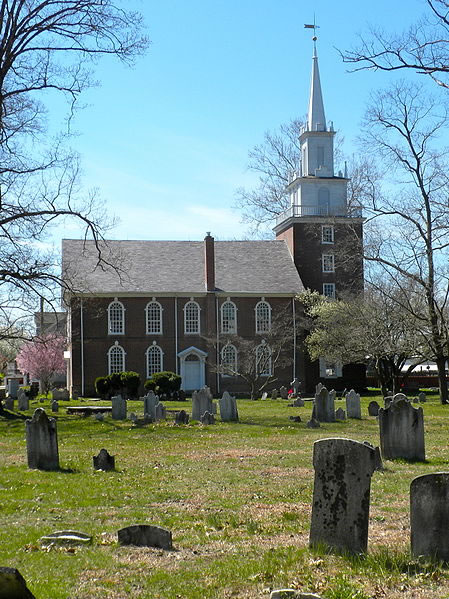
The congregation was founded about 1700 as a Swedish Lutheran Church with services in Swedish. It later became Anglican, then Episcopal, with the church built in 1786.

Gov. Charles C. Stratton House

Photo courtesy of Wikipedia.org

1791Governor Stratton

Gov. Charles C. Stratton House

Woolwich Township

Woolwich Township, NJ

The house was built in 1791. It was the home of Governor Charles C. Stratton, the first New Jersey governor to be elected by popular vote.

Friends Meeting House

Photo courtesy of Wikipedia.org

Quaker History1799Upper Greenwich

Friends Meeting House

Mickleton / East Greenwich

Mickleton, NJ

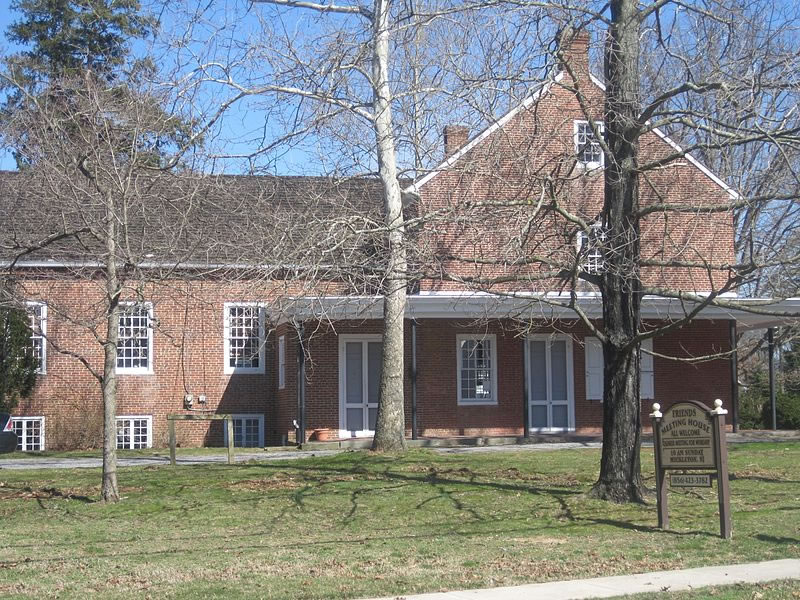
On December 13, 1756, permission was granted by Haddonfield Monthly Meeting for Friends near Raccoon Creek to hold an indulged meeting for worship at Solomon Lippincott’s home. The meeting became known as Solomon’s Meeting.

The present Friends Meeting House was completed in 1799 on a two-acre plot donated by Samuel Mickle and Samuel Tonkin. The bricks were burned on the farm of William Batten near Clarksboro.

Colonel Bodo Otto House

Historic image from original NJTGO source

Revolutionary WarMedical HistoryKings Highway

Colonel Bodo Otto House

Mickleton / East Greenwich

Kings Highway, Mickleton, NJ

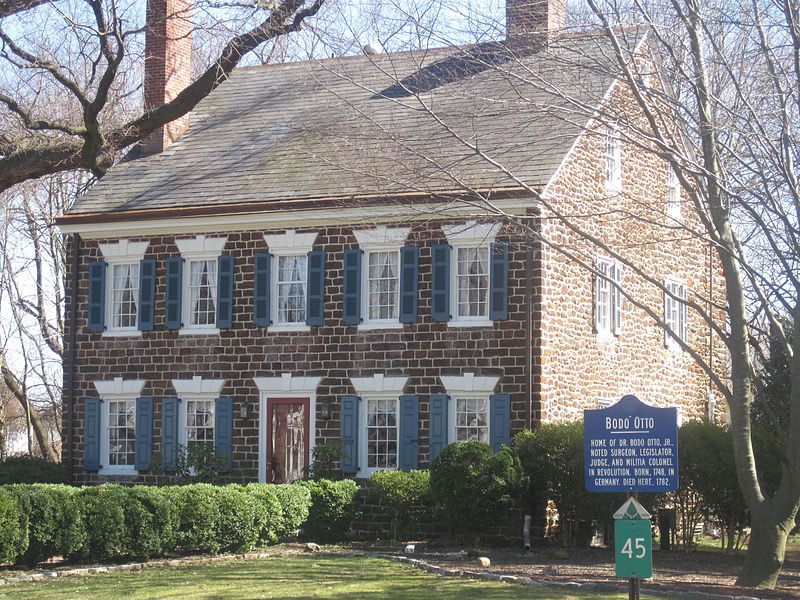
Dr. Bodo Otto, originally from Luneburg in Prussia, came to America in 1752. In 1772, his son Bodo Otto, Jr. purchased land at Mickleton. Dr. Bodo Otto, Jr. served as a surgeon in Washington’s Army at Valley Forge and lived here. During a Tory invasion in 1777, the place was partially burned. The original property dates back to 1688.

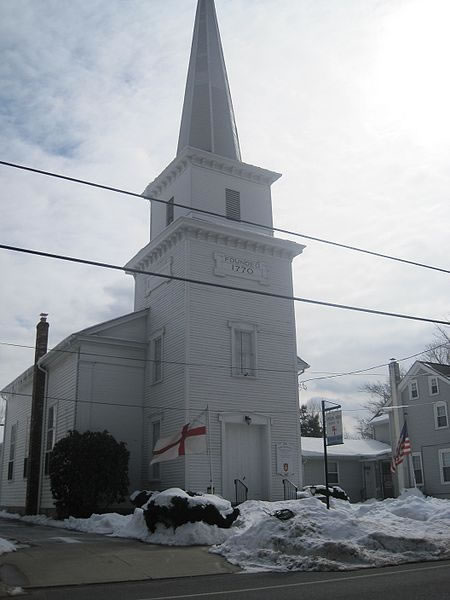
St. Peter's Episcopal Church

Photo courtesy of Wikipedia.org

1770Anglican / Episcopal History

St. Peter's Episcopal Church

Clarksboro / East Greenwich

Kings Highway, Clarksboro, NJ

St. Peter’s Protestant Episcopal Church was founded on November 9, 1770 and incorporated April 28, 1835. It was a colonial parish and the last Anglican church founded in New Jersey before the Revolutionary War.

Historic Places

Glassboro, Pitman, Monroe & Harrison Area

St. Thomas Episcopal Church

Photo courtesy of Wikipedia.org

1846Church

St. Thomas Episcopal Church

Glassboro

Main and Focer Streets, Glassboro, NJ

Built in 1846.

Pitman Grove

Photo courtesy of Wikipedia.org

Camp Meeting1882 AuditoriumPitman History

Pitman Grove

Pitman

Pitman, NJ

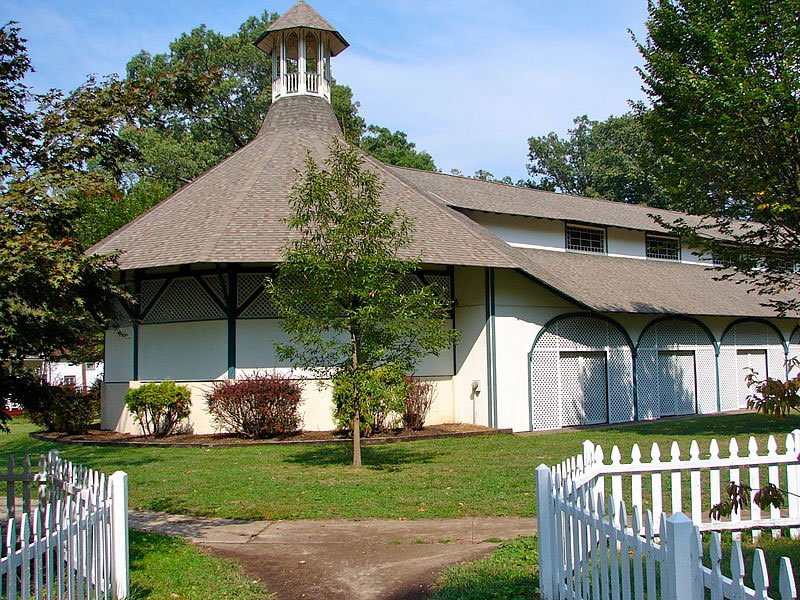
Pitman Grove developed from a summer camp meeting at the turn of the century. The Camp Meeting Auditorium, built in 1882 and later renovated by the Borough, was once a center of Methodist worship. Revival meetings began there in 1871.

The Grove’s 12 avenues, named for the disciples of Christ, radiate from the auditorium like spokes on a wheel. Small cottages were eventually built along the avenues, helping lead to the origin of Pitman. In 1905, Pitman Grove became the Borough of Pitman.

Mullica Hill Historic District

Photo courtesy of Wikipedia.org

Historic DistrictMain StreetHarrison Township

Mullica Hill Historic District

Mullica Hill / Harrison Township

Mullica Hill, NJ

The district covers much of historic Mullica Hill, including Main Street from Mullica Hill-Bridgeport Road to the junction of Commissioners Road and Bridgeton Pike in Harrison Township. The original NJTGO text notes St. Stephen’s Episcopal Church and the district’s National Register history.

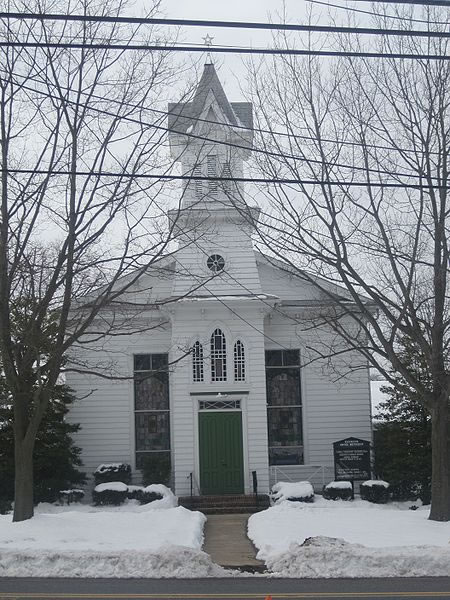
Richwood Methodist Church

Photo courtesy of Wikipedia.org

Methodist HistoryRichwood

Richwood Methodist Church

Harrison Township / Richwood

Elmer Road, Harrison Township, NJ

On May 22, 1860, the Mount Pleasant Methodist Episcopal Church was organized in a community once known by several names, including White Horse, Campbell’s Cross Roads, Mount Pleasant, Five Points, Richwood, and “Hell Town.” Early meetings were held at Clems Run School House and later at Richwood Academy before the congregation resolved to build a new church.

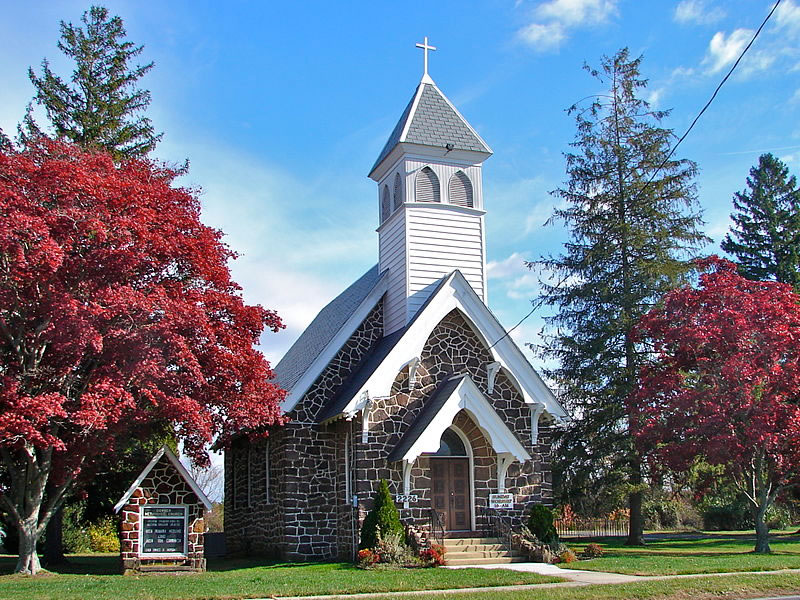
Downer Methodist Episcopal Church

Photo courtesy of Wikipedia.org

ChurchMonroe Township

Downer Methodist Episcopal Church

Monroe Township

2226 Fries Mills Road, Monroe Township, NJ

A school was built here in 1871 and was later taken over by the church, expanded, destroyed by fire, and rebuilt. The sign in front calls it “The little church with the big welcome.”

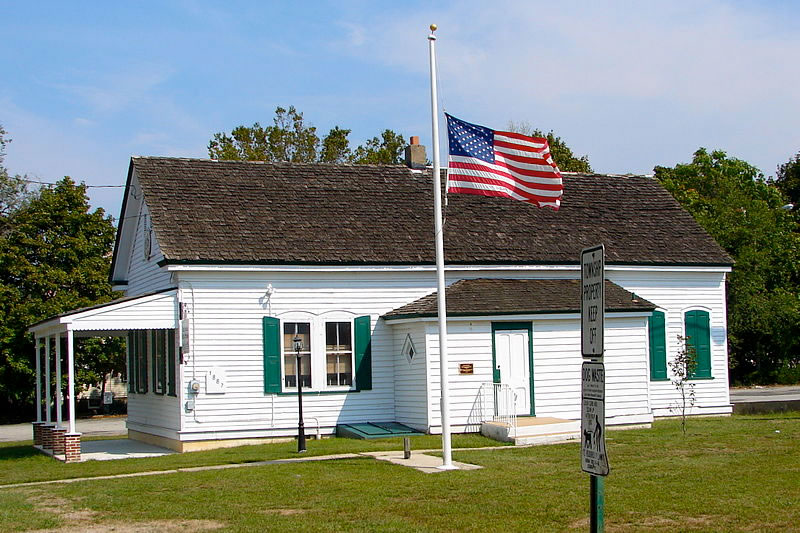
Hall Street School

Photo courtesy of Wikipedia.org

Schoolhouse1887

Hall Street School

Monroe Township

Hall Street, Monroe Township, NJ

The school was built in 1887.

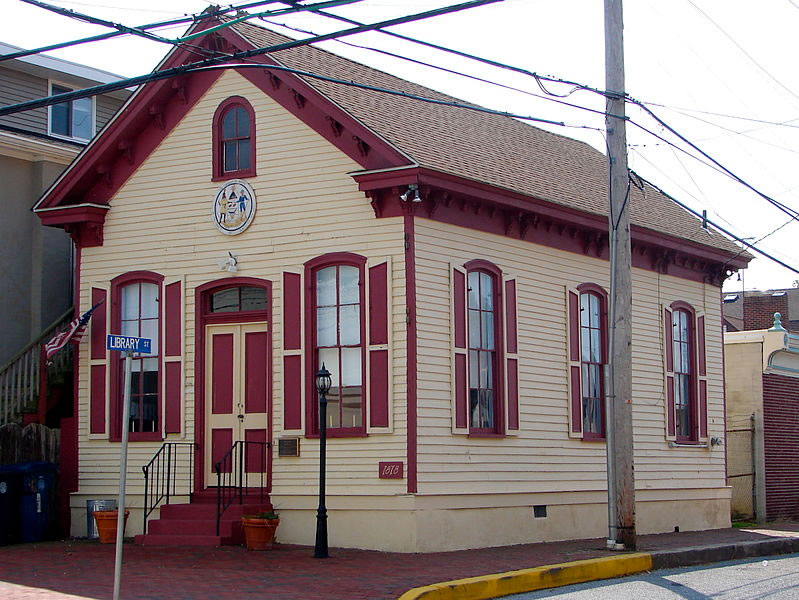
Free Library and Reading Room / Williamstown Memorial Library

Photo courtesy of Wikipedia.org

Library1878

Free Library and Reading Room / Williamstown Memorial Library

Williamstown / Monroe Township

405 South Main Street, Williamstown, NJ

The library building was built in 1878.

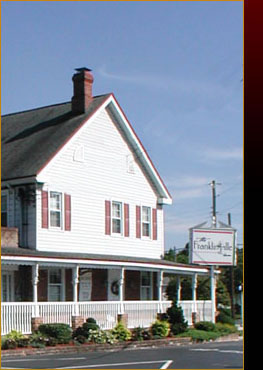
Franklinville Inn

Historic image from original NJTGO source

Stagecoach StopInnDelsea Drive

Franklinville Inn

Franklinville / Franklin Township

2526 Delsea Drive, Franklinville, NJ 08322

This old hostelry was once a well-known stagecoach stop in Little Ease, now Franklinville. It was standing before 1826, when Phebe Cake petitioned to have the license continued. The site once included a large cook house, smoke house, wagon sheds, and water trough for horses.

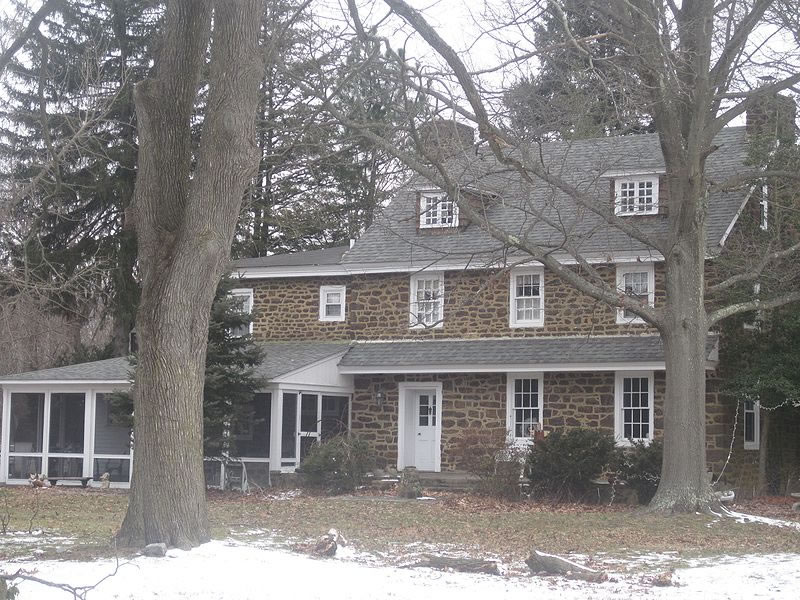
Jesse Chew House

Photo courtesy of Wikipedia.org

1772Methodist HistoryStone House

Jesse Chew House

Sewell / Mantua Area

Mantua-Sewell Road, Sewell, NJ

Jesse Chew was a Methodist preacher, and his home was spared from British raids. The Jersey sandstone house, built in 1772, retains original details including hand-hewn rafters, a corner fireplace, iron door hinges, and finger latches.

Historic Places

Early Inns, Roads & Rural Sites

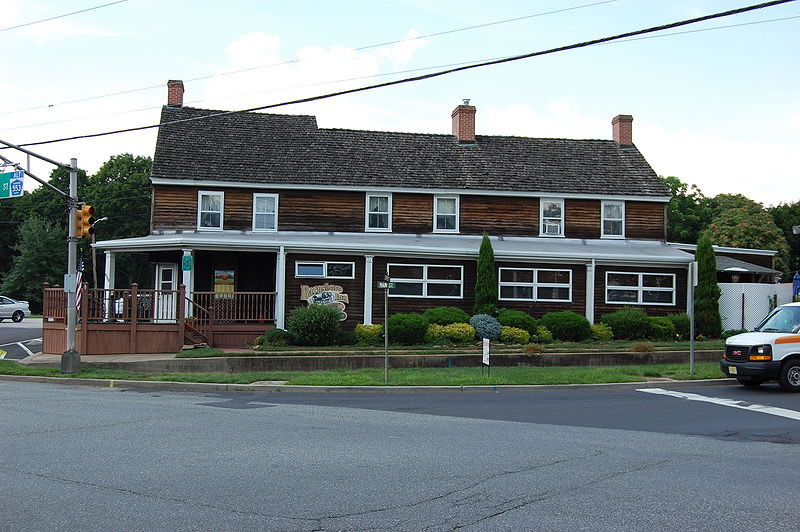
Barnsboro Hotel

Photo courtesy of Wikipedia.org

Inn18th CenturyRoadside History

Barnsboro Hotel

Barnsboro / Mantua Area

Pitman and Sewell Road, Barnsboro, NJ

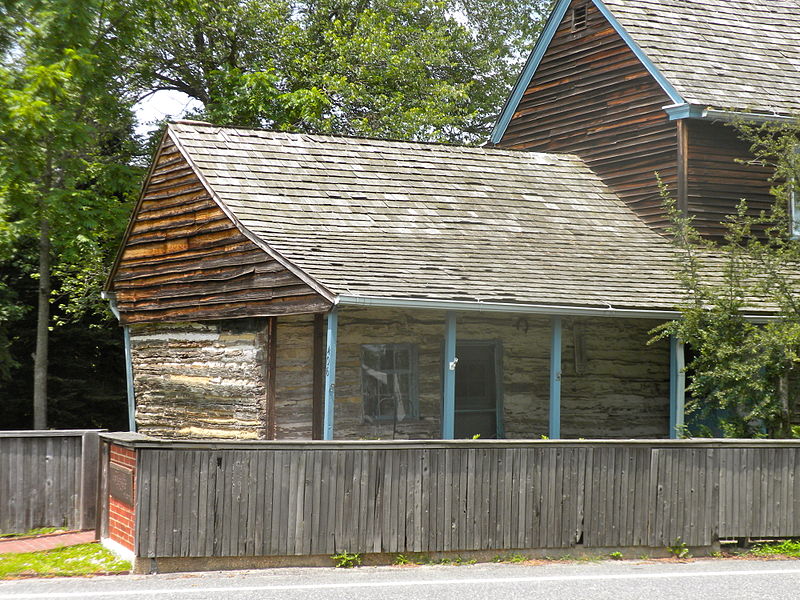
The original section of this old hotel was built of cedar logs twelve by sixteen inches squared and was standing as early as 1720, then owned by John Budd. John Barnes, from whom Barnsboro takes its name, was issued the first license for an inn on March 19, 1778.

Death of the Fox Inn

Historic image from original NJTGO source

InnFox Hunt ClubRevolutionary War

Death of the Fox Inn

Mount Royal / East Greenwich

Old Kings Highway, Mount Royal, NJ

Built in the early 1700s, the inn was a rendezvous for the Gloucester Fox Hunting Club, active from 1766 to 1818 and described as the first such hunt club in America. During the Revolution, it was used for recruiting and as a military headquarters.

Nearby Town Pages

Explore Gloucester County Towns